The Guardian
26. November 2026
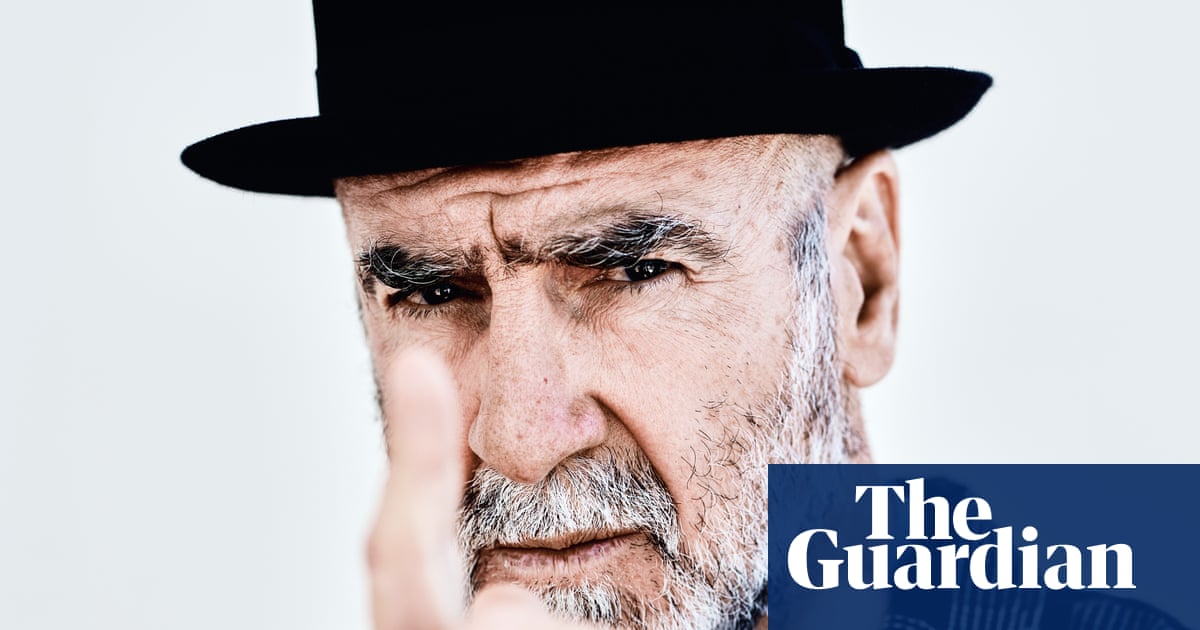
“I’m an angel and a demon,” Éric Cantona says intently during a gripping new documentary about his life on and off the football pitch. “And an angel or a demon, you love him or you hate him. I’m far from being the person with the greatest integrity. I’m far from being the person who always tells the truth. I’m far from being the person who has never been hypocritical. Maybe I’m a good person, but I can also be a flower of evil. It’s the first time in my life I’ve realised this. I am a flower of evil, and I find it very beautiful.”
It’s hard to know what to expect from the only written interview pinned to the release of Cantona: Flower of Evil. Joel Cantona has warned that his famous brother will walk out at any mention of the enduring crisis surrounding Manchester United, whether it’s a question about Mauricio Pochettino’s arrival or the Glazer family’s ruinous ownership of the club.
I prepare for a possible meltdown because rare archive footage, which opens the documentary, captures a televised standoff between Cantona and a few French journalists. He objects to the fact that L’Équipe had described his kung fu kick against a Crystal Palace supporter in 1995 as “unforgivable”.
After asking who is truly “unforgivable”, and highlighting the historical sins of the Catholic church, Cantona sneers: “I piss on the pope’s arse. Just as I piss on the arse of certain journalists … including you and you,” he says, pointing to two outraged writers.
Now, 30 years later, Cantona emerges in his home city of Marseille, wearing a natty trilby. Within minutes I can tell that the flower of evil is elsewhere because Cantona is in a generous mood.
As he recalls that bitterly sensational clash with the French reporters he smiles: “I’m a good client for the journalists – and they are a good client for me to express myself. We play a bit like the cat and the mouse. Sometimes we have good relationships, sometimes a bad relationship. But it’s always interesting and exciting.”
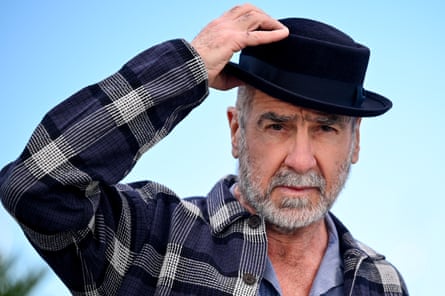
Éric Cantona: ‘I’m instinctive. If I feel bad I go. If I feel good, I try to create a relationship.’ Photograph: Stéphane Cardinale/Corbis/Getty Images
This might be Cantona at his most angelic, stretching the truth about the supposed thrill of his journalistic encounters, but it’s fitting that the film starts with the 60-year-old quoting Charles Baudelaire, the 19th-century French poet who, in his Flowers of Evil collection, wrote: “I am the wound and the knife/I am the blow and the cheek/ … The victim and the executioner …”
Cantona’s brilliance and spite defined his troubled time at six French clubs between 1983 and 1992. He could have “disappeared” from football because, despite being France’s most gifted player, he had fallen out with the national manager. The young Cantona said: “I hope people realise Henri Michel is one of the most incompetent coaches in world football.”
Michel Platini, who replaced Michel, persuaded Cantona to end his fleeting retirement in 1992 by moving to England. As Cantona says: “I knew it will be my last chance … and it’s really in England where I regain this passion for football … it’s a rebirth.”
The documentary provides a compelling account of his turbulent love affair with English football – but ignores a strange prelude at Sheffield Wednesday. Cantona tells me this forgotten strand of his story with amused incredulity. “I arrived at Sheffield Wednesday and we played a friendly. We won 4-3 and I scored three goals. And then I waited to sign the contract. At the end of the week they said: ‘You have to spend one more week on trial.’ I said: ‘No. I leave.’”
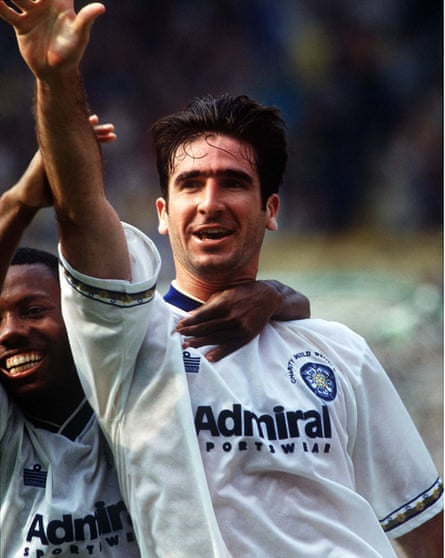
Éric Cantona on his time at Leeds: ‘It was old-fashioned football. It was interesting. There was also, for me, the feeling of adding something different. I played with wonderful players’ Photograph: Colorsport/Shutterstock
Who managed Wednesday then? “Trevor Francis – who was a great player,” Cantona replies. “Howard Wilkinson heard about that and asked me to come to Leeds. I arrived in Leeds and then we became champions and it was a great time.”
That deceptively simple last sentence fails to capture the seismic impact Cantona had on English football and especially on Leeds, who won the league title for the first time in 18 years in 1992. “It was old-fashioned football,” Cantona says. “It was interesting. There was also, for me, the feeling of adding something different.”
Was it disheartening playing antiquated football? “No, because I played with wonderful players. We had a great midfield with Gary Speed, David Batty, Gary McAllister and Gordon Strachan. And quickly [the following season] I arrive at Manchester United with Alex Ferguson. The club had the Busby Babes. That was wonderful football. Manchester United has always been a club where winning in a good way is important.”
This should be the moment to ask Cantona about the contrast with the current moribund state of United but, rather than falling out over his refusal to discuss the club now, it’s enough to hear him in full flow. “This club always loved people with different personalities. They loved George Best, Brian McClair, [Norman] Whiteside, [Roy] Keane …”
Cantona was adored at Old Trafford, as he had been at Leeds before his shock departure to United for a mere £1m in November 1992. He also led United to their first Premier League title, in 1993, after a 26-year drought.
There are great clubs in Italy, Spain and Germany so could he have resurrected his career in one of these countries? Cantona shakes his head: “I love Italian football. I love Spanish football. I love Barcelona. But nothing can compare to English football and the fans, the way they sing and express themselves. It’s so powerful.”
Cantona remembers that, when he arrived in England, “in the street, nobody knew me. I felt free for the first time in my life. I could go have a drink somewhere, listen to some music and it was always peaceful.”
Ferguson recalls that he asked Guy Roux, the wise old manager who nurtured Cantona at his first club, Auxerre, how to harness his volatile talent. Roux offered two words: “Love him.”
Cantona nods: “I’m instinctive. If I feel bad I go. If I feel good, I try to create a relationship. And when I arrive in Manchester I see the ghosts of the past. I felt this very strong energy and I thought: ‘Maybe this is the place where I will have the opportunity to express myself.’ I found in Alex Ferguson the perfect manager. I was very lucky he gave me this freedom. He understood me so well so I could express myself 100%. He’s a great manager.”
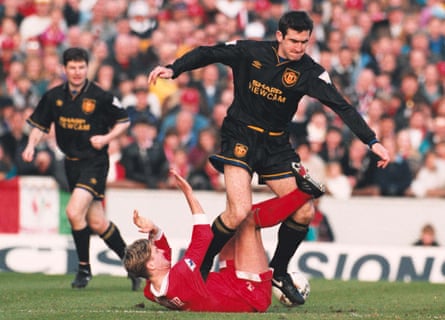
One of several flashpoints from Éric Cantona’s career: a stamp on Swindon’s John Moncur in 1994 that results in a red card. Photograph: Colorsport/Shutterstock
Everything changed when Cantona’s temper returned – culminating in the dark moment in January 1995 when, after he was sent off against Crystal Palace, he was insulted by a rival fan as he headed towards the tunnel. Cantona launched himself at the man and, in mid-air, caught him with a scything kung fu kick.
He faced a charge of criminal assault and was sentenced to two weeks in prison, a judgment which was reduced to 120 hours of community service on appeal. Cantona was banned from football for eight months and returned to France.
He looks at me coolly: “I know people expect me to say: ‘Oh, I regret it.’ No, I don’t regret it. If I regret something, it’s that I would love to kick him in another [place].” Cantona points out that perceptions are always changing. “The kung fu kick was criticised a lot, especially by journalists. But now it’s a [more positive] symbol. So I change everything.”
Kick off your evenings with the Guardian's take on the world of football

after newsletter promotion
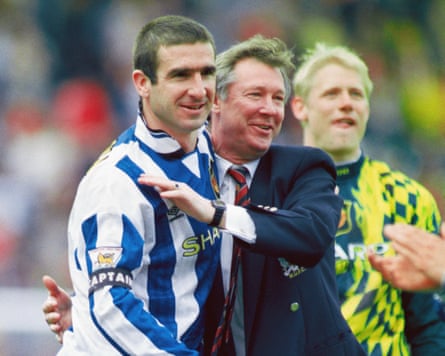
Éric Cantona with his Manchester United manager after the league title was sealed in May 1996: ‘I found in Alex Ferguson the perfect manager – he understood me so well.’ Photograph: Ben Radford/Getty Images
Did much thought go into his cryptic comment after the court hearing:“When the seagulls follow the trawler it’s because they think sardines will be thrown into the sea.”
Cantona grins. “No. I didn’t want to speak to the press, but the lawyer said: ‘You have to say something.’ I could have said: ‘I walk on the moon and tomorrow I dive deeper in the ocean.’ It was good for everybody.We all enjoyed it together.”
Ferguson, with compassion and guile, enticed Cantona back to Manchester. It was a triumph as, in a young team including David Beckham, Ryan Giggs and Paul Scholes, Cantona was a model of brooding magnificence as he inspired United to another championship.
He left the game for good the following year, in 1997, after captaining United to a fourth league title in five seasons. “I was very passionate about other things,” he says, “and I didn’t want to waste time. I wanted to do something else.”
Cantona adds: “I left football because I lost passion for the game. I had to be honest with myself, and with the fans. I’m very proud of that [honesty].”
There is a deep bond between Cantona and the older men in his life. When we spoke this month, Ferguson was 84, Cantona’s father Albert was 86, Roux was 88 and Ken Loach, the film-maker, was 90. “I met a few people in my life,” Cantona tells me, “and Guy Roux, Alex Ferguson, Ken Loach and, of course, my father, are the most wonderful people I know.”
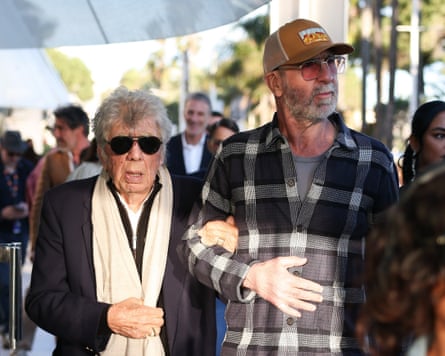
Éric Cantona with his father Albert – ‘My God, my master’ – in May this year. Albert’s death was announced by his son two days after this interview took place. Photograph: Aissaoui Nacer/Backgrid
Two days after our interview, Cantona announced the death of his dad with a heartfelt message on Instagram accompanied by a black-and-white photograph of Albert smoking a cigar: “My father. My God. My master. Rest in peace.”
The importance of his father, a painter who nourished Cantona’s interest in art and acting, is rivalled only by Ferguson. There is a deeply touching segment in the film when Ferguson reads aloud the letter of gratitude he wrote to Cantona after the footballer retired at the age of 30.
We also talk about what Cantona might have done had he not worked so much in film, art and music. “I still would have been involved in football, maybe as a manager,” he says. “It’s very interesting and I would have liked to be a manager in an artistic way, trying to create something.”
Would he have been a good manager? Cantona laughs. “I don’t know. But I will have tried to find something that nobody tried before. Something original – like Johan Cruyff at Barcelona. Or Alex Ferguson at Manchester United. It’s a big club, a rich club, it could buy anyone. But he believed in a young generation and he created a way to manage players.”
Cantona rarely watches football but when did he last see an entire game?“I’m shooting a TV series in Marseille and last month I went to the stadium to see Marseille against Olympiakos in the Europa League. It was the first time I came back to Marseille since 1991 when I was a player. They lost 1-0 but I enjoyed it because Marseille is in my veins, like English football and the fans of Manchester United.”
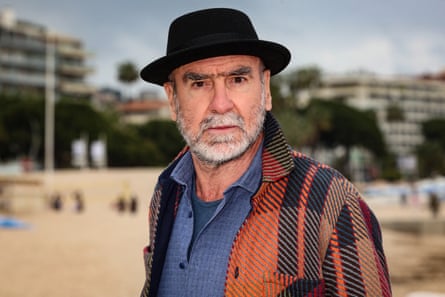
Éric Cantona on the demon inside him: ‘It’s my best friend but there is always a fight with a different little voice inside.’ Photograph: Valéry Hache/AFP/Getty Images
The world is changing so fast and, after 45 minutes, we start talking about AI and the future. “Of course,” Cantona says when I ask whether he is concerned. “I try as hard as possible to stay away [from technology]. I can show you my phone.”
He brings out an old brick. “I never had anything else,” Cantona says cheerfully. “I never had a smartphone. I don’t want it. More and more people realise that they become a prisoner of it. If you use it well, it can be good. But I’m a bit excessive. So I prefer not to have it.”
I ask Cantona about the demon inside him. What is it? “My instinct. It’s my best friend but there is always a fight with a different little voice inside. This voice is still alive.”
Cantona tips his hat one last time and grins: “We are still fighting. But I win a lot of fights.”
Cantona: Flower of Evil is in UK & Ireland cinemas 7 and 12 December only, with Éric Cantona Q&A broadcast live from Manchester. Participating cinemas here and ticket for the event here
Artikel von The Guardian. GoalingBreak zeigt den Text zur leichteren Lesbarkeit an: Alle Rechte verbleiben beim Herausgeber.
Original lesen →